In Intervention 2, I intentionally chose a group made up entirely of people who were born and raised in Chengdu. Unlike the previous round, where the conversation reflected the clash and dialogue between locals and outsiders, this time I wanted to shift the focus inward—to the lived and embodied experience of local residents. Locals are not just familiar with Chengdu; they have grown up inside its food culture. They are not observers passing through the city like tourists. They are the practitioners, witnesses, and participants of Chengdu’s everyday culinary life.
For this session, I invited five participants from different backgrounds, but all deeply rooted in Chengdu.
The first is Honghan Li, a 27-year-old senior graphic designer. His work is closely tied to youth culture, city events, and visual identity, so his understanding of Chengdu’s culture comes from years of observing how the city expresses itself visually.
The second participant is Man Luo, a 26-year-old cheerleading teacher. She loves dancing, K-pop, and discovering new restaurants. She constantly compares flavors and experiences—thinking about which dishes can truly represent Chengdu. For her, food evaluation itself becomes a kind of cultural judgment.
The third participant, Xin Wen, also 26, teaches Chinese folk dance. She always stays ahead of food trends, exploring newly opened restaurants and seasonal food crazes. Through her perspective, we see a version of Chengdu where food is always renewing and evolving.
The fourth is Latin dance teacher Yuge Li. Her experience represents a different side of Chengdu—the rhythm of nightlife, gatherings, food and social scenes woven together. The fifth participant, Yuqi Pu, works in software testing. His experiences reflect the more everyday side of Chengdu’s food culture: workplace meals, street snacks, quick lunches, and late-night dinners during overtime.
And finally, there is myself, Paris. I grew up in Chengdu as well, so in this intervention I was not only the researcher, but also someone who shared the same emotional memories and cultural background.
I chose this group because they possess a unique and irreplaceable familiarity with Chengdu’s food culture. They don’t need travel guides or official cultural labels. The foods that represent Chengdu are already woven into their everyday lives. They have eaten, compared, debated, and grown up with these flavors.
So unlike Intervention 1, which brought together different cities, backgrounds and cultural distance, this round felt like turning the lens inward. Through these five participants, I started to see the “taste of Chengdu” from within. It is not singular, nor officially defined. It is constructed through the daily experiences of the people who were raised here.
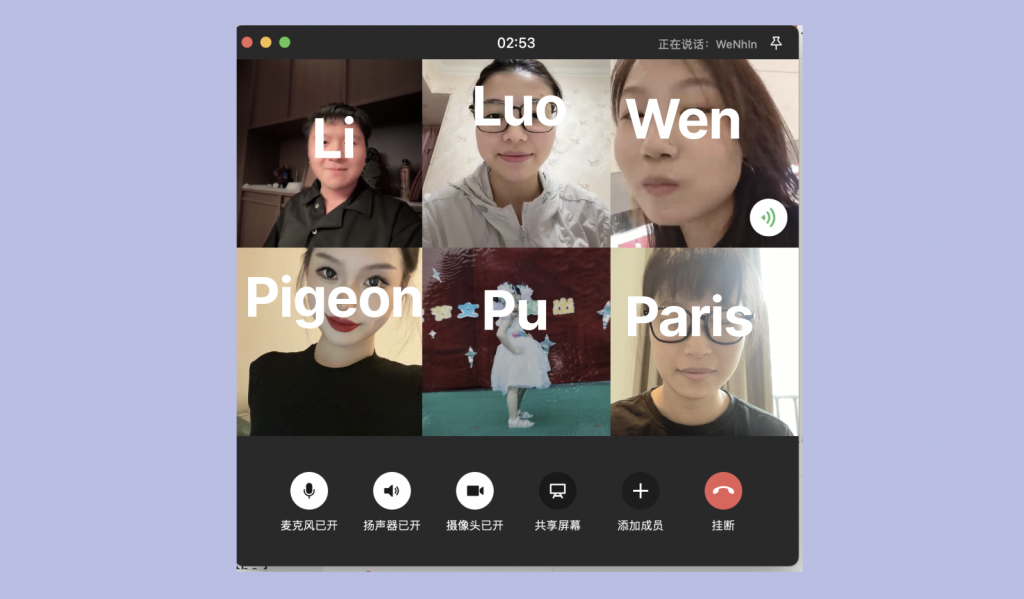
Online meeting
Chinese Version
在 Intervention 2 中,我刻意选择了一组完全由成都本地人组成的参与者。与上一轮实验中混合外来者与本地人的策略不同,这次我想把视角拉回到“本地人的内在经验”上。本地人之所以重要,是因为他们不仅成长于成都,还真正生活在这座城市的日常饮食文化中。他们不是游客的旁观者,而是这座城市食物文化的实践者、见证者与参与者。
这一次我邀请了五位来自不同领域但都在成都土生土长的参与者。
第一位是 27 岁的资深平面设计师 Honghan Li。他的工作常与年轻文化、城市活动和视觉符号相关,他对成都文化的敏感更像是一种长久的观察视角。
第二位是 Man Luo,一位 26 岁的中学啦啦操老师。她热爱舞蹈、K-pop 和探索各种餐厅,她总会思考哪家更好吃、哪种风味代表成都。这种“比较”和“品鉴”本身就是一种文化判断。
第三位参与者 Xin Wen 同样 26 岁,是一位中国民间舞老师。她总是走在发现新美食的前线,会关注城市里出现的每一个新餐厅和新口味,从而让我们看到“食物”也在不断更新与流动。
第四位是 Latin 舞老师 Yuge Li,她的体验呈现了另一种成都——夜生活、聚会、美食与社交场景交织在一起的城市节奏。第五位参与者 Yuqi Pu 是软件程序校验员,他代表了更“日常”的生活方式,他的美食记忆往往来自通勤、加班、午休时间的食物选择。
最后还有我自己 Paris。我也是成都人,这让我在这次实验中不仅是研究者,同时也是拥有情感与记忆的参与者。
选择这一组参与者,是因为他们身上拥有一种难以替代的“文化熟悉度”。他们不需要查攻略,也不需要追寻官方的文化标签,因为那些代表成都的食物已经是他们生活的一部分。他们吃过、比较过、讨论过、争论过,也在这些味道中成长。
因此,相比 Intervention 2 中跨领域、跨地域、跨身份的文化碰撞,这一次的研究更像是在向城市的内部回望。通过这五位参与者,我开始重新理解“成都的味道”。它不是单一的,也不是被官方定义的,而是由每一个生长在这里的人共同构筑的日常经验。
Leave a Reply